
✕
935 results
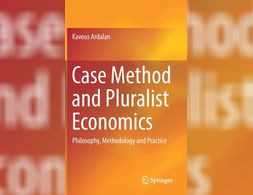
This book discusses the relationship between pluralist economics and the case study method of teaching, advocating the complimentary use of both to advance economics education. Using a multi-paradigmatic philosophical frame of analysis, the book discusses the philosophical, methodological, and practical aspects of the case study method while drawing comparisons with those of the more commonly used lecture method.
Economics should schematically explain the key elements and main strands of this core part of social life: the actual workings of our economies. This book argues that orthodox, modern neoclassical economics does not fulfil this core task. Standard economics models do not address the real functioning of our market economies, but rather an imagined economy.

Galbraith gives an overview of economic history from the 18th century until the end of the 19th century covering issues such as the industrial revolution the enclosure of the Scottish highlands the Irish famine and the colonization of North America Additionally the ideas of economists such as Smith Ricardo Malthus …
How has financialisation changed saving What are its implications on a macro economic level and from a welfare state perspective Craig Berry I PEEL

The vast uncertainty surrounding the possible spread of COVID 19 and the duration of the near economic standstill required to combat it make forecasting little different from guessing Clearly this is a whatever it takes moment for large scale outside the box fiscal and monetary policies Carmen M Reinhart Project …

In this Blog Post on developmenteconomics org Christina C Laskaridis PhD candidate in Economics at SOAS elaborates on the economic fallout of the corona pandemic and especially its impact on the Global South The author focuses in particular on the issue of debt moratoria and debt restructuring and the measures …

The most successful multialternative theories of decision making assume that people consider individual aspects of a choice and proceed via a process of elimination. Amos Tversky was one of the pioneers of this field, but modern decision theorists – most notably Neil Stewart – have moved things forward. At the current stage the theories are able to explain a number of strictly ‘irrational’ but reasonable quirks of human decision making, including various heuristics and biases. Not only this, but eye movements of participants strongly imply that the decision-making process depicted in the theories is an accurate one.

In both economics textbooks and public perceptions central banks are a fact of life. On the wall of my A-level economics classroom there was the Will Rogers quote “there have been three great inventions since the beginning of time: fire, the wheel, and central banking”, summarising how many economists view the institution. There is a widespread belief that there is something different about money which calls for a central authority to manage its operation, a view shared even by staunch free marketeers such as Milton Friedman. This belief is not without justification, since money underpins every transaction in a way that apples do not, but we should always be careful not to take existing institutions for granted and central banking is no exception. In this post I will look at the idea of private or free banking, where banks compete (and cooperate) to issue their own currency.

The author discusses the various dimensions of the recent hike in inflation in the context of the United States and policy dilemmas around high inflation GDP decline and unemployment Servaas Storm Institute for New Economic Thinking

This course will fundamentally ask whether we can, or even should use the word ‘decolonising’ in our pursuit of a better economics?

This course is an introduction to the economic theories of financial crises It focuses on amplification mechanisms that exacerbate crises such as leverage fire sales bank runs interconnections and complexity It also analyzes the different perspectives on the origins of crises such as mistaken beliefs and moral hazard and discusses …
Use economic models to learn how prices and markets benefit society in the face of scarcity and then apply those models to analyze policy Jonathan Gruber edX Massachusetts Institute of Technology
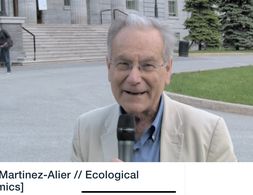
Economist and 2020 Balzan Prize winner for Environmental Challenges: Responses from the Social Sciences and Humanities, Joan Martínez Alier, speaks on the importance of ecological economics and its timeliness around the 2007/2008 global financial crisis. He speaks on the importance of building the field of ecological economics “from the ground up” through praxis.
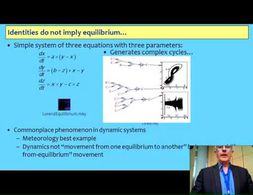
Steve Keen discusses DSGE modeling and microfoundations by asking the question if it is ideologically possible to derive macroeconomics from microeconomics.
Feminist economist Nancy Folbre presents a historical analysis of the interrelated development of Patriarchy and Capitalism. She describes the role of women in the reproduction of labour, their “specialization” in care and their changing involvement in the labour market. Folbre argues that capitalism weakens patriarchy but at the same time relies on unpaid caring activities.
In this talk, Virgil Henry Storr, a Research Associate Professor of Economics in the Department of Economics at George Mason University, talks about his research into to post-disaster recovery and the role that social entrepreneurship plays in rebuilding the communities and social networks that get disrupted, or entirely eliminated.

The podcast explores the psychosocial implications of poverty in the society. Keetie Roelen investigates how the emotion of shame and policy-making are intertwined.
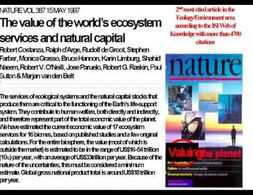
Robert Costanza briefly present various methods of environmental valuation, and talks about the changes in the global value of ecosystem services. He then introduces the major ecosystem services, and how different methods of valuation affect the preferred policies to address environmental issues.
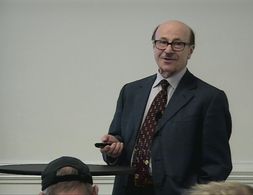
Donald Trump won in 2016 largely because enough voters in three states, all in the Rustbelt, which had voted for Barack Obama in both 2008 and 2012, switched their electoral votes from Democratic to Republican.
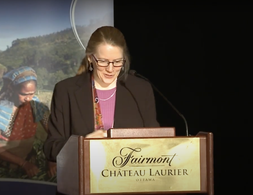
Professor Jennifer Clapp explains the dynamics of financialization of land and agricultural commodities in Subsaharan Africa. She points to the historical roots of accelerated land speculation and their connection to financial institutions, both generating and reinforcing the process of financialization of African land. Besides talking about roots and dynamics of speculation with land on financial markets, she puts the perspective of scholarly investigation onto the investor's side in discussing guidelines of responsible investment and regulation in the front instead of focussing on the receiving countries.
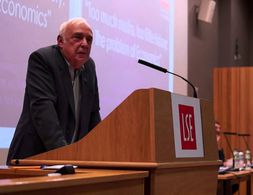
This panel discusses the role of mathematics and history in economics. Lord Robert Skidelsky and Dr. Ha-Joon Chang advocate for a more prominent role of history and a less prominent role of mathematics within economics. Prof. Steve Pisckhe and Prof. Francesco Caselli defend the dominant role of mathematics within economics. Each of the speakers gives a 10-15 minutes talk advocating his position, before the panel is opened up for Q&A. The discussion is moderated by Prof. James Foreman-Peck.
To prevent the coronavirus shock to demand precipitating a long-lasting depression, government needs to become short-term payer of last resort.
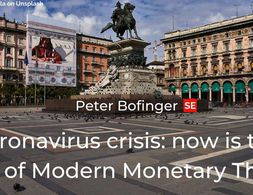
Peter Bofinger argues that the Modern Monetary Theory gives theoretical justification for bold answers to the corona crisis.
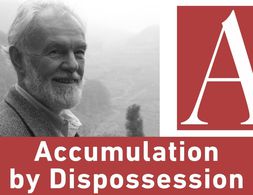
In this short lecture the marxist economic geographer David Harvey explains how his theory of The accumulation of dispossession came about and its central principles The theory builds on Marx law of the centralisation of capital arguing how the accumulation no longer stems from producing rather through trading asset values …

Jens Beckert and Richard Bronk, authors of "Uncertain Times", explore the extent to which flaws, blind spots and more importantly bias created by macroeconomics models, based on forecasts and statistical devices, shape crisis and the market economy in which we live.

In the pluralist showcase series by Rethinking Economics, Cahal Moran explores non-mainstream ideas in economics and how they are useful for explaining, understanding and predicting things in economics.
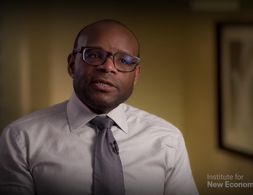
In this short talk 'Measuring the Danger of Segregation' Trevon Logan, Professor of Economics at The Ohio State University, explores the impacts of structural racism on economics and health.
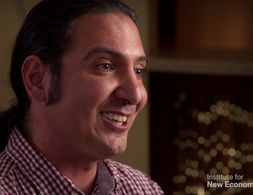
Economists claim they are not biased or ideological, but research by economist Mohsen Javdani tells another story. Javdani discovered that 82% of economists claim that statements and arguments should be evaluated on the content only, but the results of the study show the exact opposite.

In this interview, the political activist, author and lecturer Dr. Vandana Shiva explains the linkage between ecology, feminism and economics along the lines of current effects and implications of the Corona-Crisis in India and around the world.

Hamilton argues that economics lacks the political economy context in order to understand racism, and demonstrates how racism is embedded in the political economy of America.
This lecture of the anthropologist David Graeber gives a brief introduction to the thoughts of his 2011 published book Debt: The First 5000 Years.
Professor Joseph Aldy from Harvard Kennedy School gives us some insights about how economics can set the balance between policymakers, scientists, employers and citizens.
We use cookies on our website. Click on Accept to help us to make Exploring Economics constantly better!