
✕
1062 results
Finance at the Threshold offers a unique perspective from an English economic and monetary historian. In it the author asks: Why did the banks stop lending to one another, and why now? Was it merely a matter of over-loose credit due to the relaxation of traditional prudence, or did global finance find itself at its limits?
Are there distinct European traditions in economics? Is modern economics homogenous and American? The volume includes case studies of the UK, Sweden, the Netherlands, Belgium, Germany, France, Italy, Portugal, Spain and Greece.

Colanders Macroeconomics 11e is specifically designed to help today’s students succeed in the principles of economics course and grasp economics concepts they can apply in their daily lives.
Until the end of the early 1970s, from a history of economic thought perspective, the mainstream in economics was pluralist, but once neoclassical economics became totally dominant it claimed the mainstream as its own. Since then, alternative views and schools of economics increasingly became minorities in the discipline and were considered 'heterodox'.
Edited by two of the foremost academics in the field, the volumes comprise insightful and original contributions from scholars across the world. The encyclopaedic breadth and scope of the original entries will make these reference books an invaluable source of knowledge for all serious students and scholars of the history of economic thought.
Heterodox Macroeconomics offers a detailed understanding of the foundations of the recent global financial crisis.
In a changing world that has been shaken by economic, social, financial, and ecological crises, it becomes increasingly clear that new approaches to economics are needed for both theoretical and empirical research; for applied economics as well as policy advice.
This book presents a methodological framework for the analysis of intercultural issues frequently misinterpreted by existing theories. It uses a challenge-and-response theory of cultural development to examine the relationship between different natural disasters and threats and the developments of ancient civilizations.
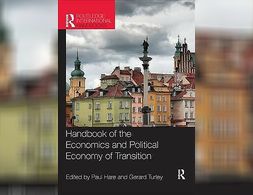
Transition from central planning to a market economy, involving large-scale institutional change and reforms at all levels, is often described as the greatest social science experiment in modern times.
Mainstream textbooks present economics as an objective science free from value judgements; that settles disputes by testing hypotheses; that applies a pre-determined body of principles; and contains policy prescriptions supported by a consensus of professional opinion.
The new edition of this classroom classic retains the organizing theme of the original text, presenting the development of thought within the context of economic history.
Economics, Culture and Social Theory examines how culture has been neglected in economic theorising and considers how economics could benefit by incorporating ideas from social and cultural theory.
Post-Keynesian and heterodox economics challenge the mainstream economics theories that dominate the teaching at universities and government economic policies. And it was these latter theories that helped to cause the great depression the United States and the rest of the world is in.
The second edition of International Political Economy continues to be the perfect short introduction to the fundamental theories and issues of international political economy (IPE).

The book deals with the financial instability hypothesis of Hyman P. Minsky and its application to current developments. The first part of the work summarizes the hypothesis and mentions works elaborating the hypothesis. The second part applies the hypothesis to the financial crisis 0f 2008/09.
Mainstream economics almost completely ignores the role power plays in determining economic outcomes, which means it can only provide partial explanations of the distribution of wealth and income, and of the problems associated with inequality and poverty.
This book retraces the history of macroeconomics from Keynes's General Theory to the present. Central to it is the contrast between a Keynesian era and a Lucasian - or dynamic stochastic general equilibrium (DSGE) - era, each ruled by distinct methodological standards.
This book represents a new foundation for the study of microeconomics, viewed from a broad perspective that takes into account new developments at the intersections with psychology, political science, the natural sciences and philosophy.
Macroeconomics is fundamental to our understanding of how the world functions today. But too often our understanding is based on orthodox, dogmatic analysis.
In economics the dominant framework for exploring the structure of market economies is provided by the neoclassical school of thought. This text aims to show how neoclassical theory is used to model market mechanisms, both in particular markets and in the market economy as a whole.
Thirty-years of economic transformation has turned China into one of the major players in the global capitalist economy. However, its economic growth has generated rising problems in inequality, alienation, and sustainability with the agrarian crises of the 1990s giving rise to real social outcry to the extent that they became the object of central government policy reformulations.
The recent financial meltdown and the resulting global recession have rekindled debates regarding the nature of contemporary capitalism.
Economics: A New Introduction provides a fresh introduction to real economics. Highlighting the complex and changing nature of economic activity, this wide-ranging text employs a pragmatic mix of old and new methods to examine the role of values and theoretical beliefs in economic life and in economists understanding of it.

Foreign exploitation of economic crises in the developing world has been a central claim of neoliberal critics. This important and recurring international theme is the subject of closer scrutiny in this new collection, where contributors offer competing interpretations of the interaction between international and domestic forces after crises.
The book is offered, in the first instance, to students who are beginners in economics, but some parts of it may be of wider interest.
The three topics, Economic Doctrines, Analysis and Modern Problems, might be the subject of concurrent courses or they may be studied consecutively.
In this classic work of economic history and social theory, Karl Polanyi analyzes the economic and social changes brought about by the "great transformation" of the Industrial Revolution.

Focusing on Kenya’s path-breaking mobile money project M-Pesa, this book examines and critiques the narratives and institutions of digital financial inclusion as a development strategy for gender equality, arguing for a politics of redistribution to guide future digital financial inclusion projects.

Planetary Mine rethinks the politics and territoriality of resource extraction, especially as the mining industry becomes reorganized in the form of logistical networks, and East Asian economies emerge as the new pivot of the capitalist world-system.
This book analyzes the transition of chocolate from an exotic curiosity to an Atlantic commodity. It shows how local, inter-regional, and Atlantic markets interacted with one another and with imperial political economies. It explains how these interactions, intertwined with the resilience of local artisanal production, promoted the partial democratization of chocolate consumption as well as economic growth.
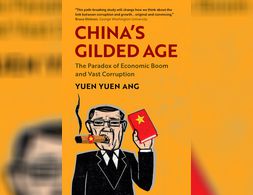
In China's Gilded Age, Yuen Yuen Ang maintains that all corruption is harmful, but not all types of corruption hurt growth. Ang unbundles corruption into four varieties: petty theft, grand theft, speed money, and access money.
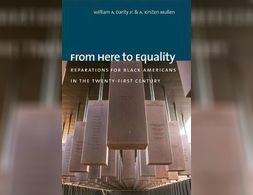
Racism and discrimination have choked economic opportunity for African Americans at nearly every turn. In From Here to Equality, William Darity Jr. and A. Kirsten Mullen confront these injustices head-on and make the most comprehensive case to date for economic reparations for U.S. descendants of slavery.
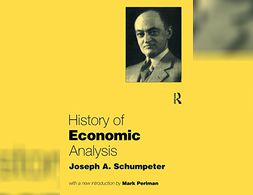
At the time of his death in 1950, Joseph Schumpeter was working on his monumantal History of Economic Analysis. Unprecedented in scope, the book was to provide a complete history of economic theory from Ancient Greece to the end of the Second World War. A major contribution to the history of ideas as well as to economics, History of Economic Analysis rapidly gained a reputation as a unique and classic work.
We use cookies on our website. Click on Accept to help us to make Exploring Economics constantly better!